
Prologue: A Warning to the Audience
The musical begins with a chilling prologue, featuring a chorus of mourners directly addressing the audience.
They deliver a stark warning about the disturbing narrative unfolding, inviting those easily unsettled to promptly depart.
This sets a darkly comedic tone, preparing viewers for the unconventional story ahead.
The Disturbing Nature of the Story
The core of “A Gentleman’s Guide to Love and Murder” lies in its unsettling premise: a calculated series of murders committed by a man determined to ascend the social ladder. This isn’t a tale of accidental deaths or passionate crimes; it’s a meticulously planned, darkly humorous campaign of elimination. The musical doesn’t shy away from depicting the act of murder, though it does so with a distinct comedic flair, which paradoxically heightens the disturbing element.
The audience is presented with a protagonist who systematically dispatches his relatives, each death more elaborately staged than the last. This isn’t glorified, but rather presented as a bizarre, almost absurd undertaking. The chorus of mourners, appearing throughout the show, serve as a constant reminder of the gravity of Monty Navarro’s actions, punctuating the comedic moments with a chilling awareness of the consequences.
The unsettling nature is further amplified by the musical’s tone – a blend of witty banter and macabre events. It forces the audience to confront the uncomfortable reality of ambition taken to its extreme, questioning the lengths to which someone might go for power and social standing. The story’s darkness is not meant to be enjoyed, but rather to be acknowledged and contemplated.
Invitation to Depart for the Faint of Heart
The opening moments of “A Gentleman’s Guide to Love and Murder” feature a direct address to the audience, delivered by a chorus of mourners. This isn’t a conventional welcome; it’s a preemptive warning. They explicitly acknowledge the potentially disturbing nature of the story they are about to present, recognizing that its themes and events may not be suitable for all viewers.
This invitation to leave is not presented as a polite suggestion, but rather as a genuine concern for the sensitivities of the audience. The mourners directly implore those with “weaker constitutions” or a predisposition to discomfort to exit the theatre immediately. It’s a meta-theatrical device, breaking the fourth wall and acknowledging the potentially unsettling content.
The purpose of this prologue isn’t to scare away the entire audience, but to establish a specific tone and prepare those who choose to stay for a darkly comedic experience. It signals that the musical will tread into morally ambiguous territory, and that laughter may be tinged with a sense of unease. It’s a bold and unconventional opening, setting the stage for a truly unique theatrical event.
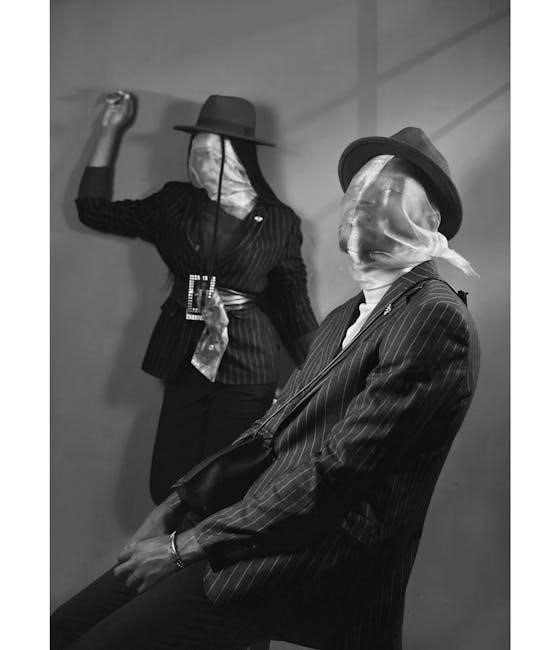
The Central Character: Lord Montague D’Ysquith Navarro
Montague “Monty” Navarro is the ambitious protagonist, a down-on-his-luck heir determined to claim his rightful place.
He’s the author of a scandalous memoir detailing his pursuit of fortune and love.
Navarro’s Title and Status: Ninth Earl of Highhurst
Lord Montague D’Ysquith Navarro holds the esteemed, yet somewhat precarious, title of the Ninth Earl of Highhurst. However, his position within the family and the line of succession is far from secure at the musical’s outset. He isn’t initially in line to inherit the family fortune and estate, fueling his desperate ambition. This lack of immediate inheritance is the primary catalyst for the darkly comedic events that follow.
The Earl of Highhurst title carries significant social weight and responsibility within the British aristocracy, yet Navarro’s claim is tenuous. He’s a distant relative, overshadowed by eight other, closer family members who stand between him and the coveted inheritance. This societal standing, combined with his financial instability, creates a compelling character driven by both aspiration and desperation. He’s determined to overcome his disadvantaged position, regardless of the moral implications. The title itself becomes a symbol of his yearning and the lengths to which he’ll go to attain it.

Navarro’s status is therefore one of potential, rather than realized power, making his journey all the more captivating.
The Memoir: “A Gentleman’s Guide to Love and Murder”
The narrative framework of the musical is ingeniously presented as a memoir penned by Lord Montague D’Ysquith Navarro himself. Titled “A Gentleman’s Guide to Love and Murder,” the work serves as a retrospective account of his audacious and morally questionable actions. This framing device allows for a darkly humorous and self-aware tone, as Navarro recounts his attempts to navigate the family succession – and eliminate his rivals.
The memoir isn’t a confession seeking redemption, but rather a boastful, almost instructional guide, detailing his methods with a chilling detachment. It’s written from a prison cell in 1909, suggesting he was ultimately apprehended for his crimes, yet maintains a playful and ironic perspective. The very title is a sardonic commentary on Victorian societal norms and the lengths to which one man would go for wealth and status.
Through the memoir, the audience gains access to Navarro’s thoughts and motivations, making him a surprisingly sympathetic, albeit flawed, protagonist. It’s a clever narrative tool that enhances the musical’s comedic and dramatic impact.

The Core Plot: A Dark Comedy of Succession
The story centers on Monty Navarro’s relentless pursuit of an earldom. He schemes to bypass rightful heirs, initiating a darkly comedic chain of events involving the elimination of eight relatives.
This outrageous plot drives the musical’s humor.
Monty Navarro’s Ambition: Jumping the Line of Succession
Monty Navarro, a distant relative with little prospect of inheritance, fuels the entire narrative with his audacious ambition. He discovers he is in line for the earldom of Highhurst, but a daunting eight relatives stand before him in the order of succession. This revelation ignites a desperate, and hilariously dark, plan to accelerate his ascent to wealth and title.
Navarro isn’t driven by a desire for power or societal contribution; his motivation is purely self-serving. He’s an outsider, an “ambitious nobody” as described, yearning to escape his impoverished circumstances and infiltrate the upper echelons of British aristocracy. This yearning manifests as a calculated, albeit morally reprehensible, scheme to systematically remove each obstacle – his relatives – from his path.
The musical cleverly portrays this ambition not as villainy, but as a darkly comedic quest. Navarro’s attempts to “jump the line” are presented with wit and theatrical flair, highlighting the absurdity of the aristocratic system itself. His relentless pursuit, coupled with the increasingly outlandish methods employed, forms the core of the show’s comedic engine, captivating audiences with its outrageous premise.
The Method: Eliminating Relatives
Monty Navarro’s ambition isn’t passive; it’s actively pursued through a series of increasingly elaborate – and deadly – schemes. The “Gentleman’s Guide to Love and Murder” isn’t merely a title, but a literal blueprint for his actions. He meticulously plots the demise of each relative standing between him and the earldom, employing a variety of methods ranging from accidental mishaps to outright, though cleverly disguised, murder.
The brilliance of the musical lies in how these eliminations are presented. They aren’t gruesome or graphic, but rather staged as comedic set pieces, often involving slapstick humor and ironic twists. Each death is tailored to the specific personality and circumstances of the victim, adding another layer of dark wit to the proceedings.

Navarro doesn’t directly commit most of these acts himself, often manipulating others into becoming unwitting accomplices. This allows the musical to explore themes of deception and moral ambiguity, while maintaining its lighthearted tone. The sheer audacity and creativity of his methods are central to the show’s appeal, transforming a potentially disturbing premise into a hilarious spectacle.

Key Themes Explored in the Musical
The musical deftly examines social climbing, the rigid structures of class, and the inherent absurdity within the British aristocracy.
It satirizes ambition and the lengths one will go to for status.
Social Climbing and Class
A Gentleman’s Guide to Love and Murder is deeply rooted in the exploration of social mobility – or, more accurately, the desperate attempts to achieve it. Monty Navarro, the protagonist, begins as an outsider, a man of dubious lineage, yearning for acceptance within the esteemed D’Ysquith family and the upper echelons of British society.
The musical brilliantly satirizes the rigid class structure of the Edwardian era, highlighting the importance placed on birthright and pedigree. Monty’s ambition isn’t driven by genuine desire for connection, but by a calculated pursuit of wealth and status. He believes inheriting the Earldom is the key to unlocking a life of privilege, demonstrating the pervasive allure of aristocracy.
The D’Ysquith family themselves embody the entitlement and snobbery associated with the upper class. Their disdain for anyone outside their circle fuels Monty’s resentment and ultimately, his murderous plot. The musical doesn’t simply portray class as a barrier; it exposes the moral corruption and superficiality that can thrive within such a system. Monty’s actions, while extreme, are presented as a darkly comedic consequence of a society obsessed with social standing.
Ultimately, the musical questions the very value of inherited status, suggesting that ambition, even when fueled by questionable motives, can be a powerful force in challenging established hierarchies.
The Absurdity of Aristocracy
A Gentleman’s Guide to Love and Murder doesn’t merely present aristocracy as a rigid social structure; it actively mocks its inherent absurdity. The D’Ysquith family, the targets of Monty Navarro’s homicidal ambition, are portrayed as a collection of eccentric, self-absorbed individuals, utterly disconnected from reality.
Their lives revolve around trivial pursuits, petty squabbles, and maintaining appearances, highlighting the emptiness at the heart of their privileged existence. Each family member possesses a unique, often ridiculous, quirk, amplifying the comedic effect and underscoring the shallowness of their world. The musical suggests that their elevated status hasn’t bestowed upon them wisdom or virtue, but rather, a heightened sense of entitlement and a remarkable lack of self-awareness.
Monty’s systematic elimination of the D’Ysquiths, while dark, is presented as a satirical dismantling of this antiquated system. The ease with which he dispatches them – often through seemingly accidental means – further emphasizes the fragility and ultimately, the meaninglessness of their aristocratic power.
The musical cleverly uses humor to expose the ridiculousness of a society that places such value on lineage and inherited wealth, questioning the very foundations of the aristocratic ideal.

Awards and Recognition
The production garnered significant acclaim, notably receiving multiple 2014 Drama Desk Awards. Jefferson Mays and Bryce Pinkham both won for Outstanding Actor in a Musical.
Robert L. Freedman secured the award for Outstanding Book of a Musical.
2014 Drama Desk Award: Outstanding Actor in a Musical (Jefferson Mays)
Jefferson Mays’s performance in “A Gentleman’s Guide to Love and Murder” was a tour-de-force, earning him the 2014 Drama Desk Award for Outstanding Actor in a Musical. Mays didn’t simply portray one character; he masterfully embodied all eight of the D’Ysquith family members who meet untimely ends at the hands of Monty Navarro.
His ability to seamlessly transition between these distinct personalities – each with unique mannerisms, voices, and physical characteristics – was breathtaking and central to the show’s comedic brilliance. The sheer technical skill and comedic timing required to pull off such a feat were widely recognized by critics and audiences alike.
Mays’s portrayal wasn’t merely mimicry; he infused each character with depth and nuance, making their demise all the more hilarious and poignant. His performance was lauded for its precision, wit, and unwavering commitment to the demanding role, solidifying his place as a leading man on Broadway and justly earning him this prestigious award.
2014 Drama Desk Award: Outstanding Actor in a Musical (Bryce Pinkham)
Bryce Pinkham’s captivating performance as Monty Navarro in “A Gentleman’s Guide to Love and Murder” rightfully earned him a 2014 Drama Desk Award for Outstanding Actor in a Musical. Pinkham brought a charming yet cunning energy to the role of the ambitious heir determined to climb the social ladder, no matter the cost.
He skillfully navigated the complexities of Monty, portraying both his endearing qualities and his ruthless determination with remarkable nuance. Pinkham’s vocal prowess and impeccable comedic timing were essential to the show’s success, captivating audiences with every scene.
His portrayal wasn’t simply about playing a villain; he imbued Monty with a relatable vulnerability, making his actions both shocking and strangely sympathetic. The award recognized Pinkham’s ability to command the stage and deliver a performance that was both hilarious and emotionally resonant, cementing his status as a Broadway star.
2014 Drama Desk Award: Outstanding Book of a Musical (Robert L; Freedman)
Robert L. Freedman’s brilliantly crafted book for “A Gentleman’s Guide to Love and Murder” was justly honored with the 2014 Drama Desk Award for Outstanding Book of a Musical. Freedman masterfully adapted the 1949 novella by H.H. Munro, transforming it into a hilarious and engaging stage production.
His writing is characterized by its witty dialogue, clever wordplay, and intricate plotting, perfectly balancing dark humor with genuine heart. The book’s structure, allowing one actor to portray all eight of the D’Ysquith family members, is a stroke of genius, showcasing Freedman’s innovative storytelling.
He expertly created a world of eccentric characters and outrageous situations, while maintaining a cohesive and compelling narrative. The award acknowledged Freedman’s exceptional skill in blending comedy, suspense, and romance, resulting in a book that is both entertaining and intellectually stimulating, forming the backbone of the musical’s success.

The Musical’s Style and Tone
“A Gentleman’s Guide to Love and Murder” embraces a witty music hall influence, delivering outrageous storytelling with charm.
The production is known for its fast-paced humor and playfully dark comedic elements.
Witty Music Hall Influence
The musical heavily draws upon the traditions of British music hall, a popular form of entertainment in the late 19th and early 20th centuries. This influence is evident in several key aspects of the production, most notably in its musical numbers and comedic timing.
Songs are often delivered with a quick tempo and a playful, theatrical energy, reminiscent of classic music hall performances. The score incorporates elements of Gilbert and Sullivan operettas, adding a layer of sophistication and wit. Furthermore, the show’s structure – with a narrator directly addressing the audience and frequent breaking of the fourth wall – mirrors the interactive nature of music hall shows.
The use of quick changes, slapstick humor, and exaggerated characterizations are all hallmarks of the music hall tradition, and are skillfully employed throughout “A Gentleman’s Guide.” This stylistic choice not only enhances the comedic effect but also provides a historical context for the story, grounding it in the era of its setting. The overall effect is a vibrant and engaging theatrical experience that pays homage to a beloved form of British entertainment.

Outrageous Storytelling
“A Gentleman’s Guide to Love and Murder” distinguishes itself through its remarkably audacious narrative. The premise – a man systematically eliminating his family members to ascend the Earl of Highhurst title – is inherently shocking and darkly humorous. The musical doesn’t shy away from the macabre, presenting each murder with a blend of wit and theatrical flair.
However, the outrageousness isn’t merely about the killings themselves; it’s about the nonchalant and almost celebratory manner in which they are depicted. Monty Navarro’s ambition is presented as both reprehensible and strangely endearing, creating a complex and compelling character. The show embraces the absurdity of the situation, turning a potentially grim tale into a riotous comedy.

This bold storytelling approach is further amplified by the musical’s stylistic choices, such as the use of a single actor to portray all eight of Navarro’s doomed relatives. The outrageousness is not gratuitous, but rather serves to satirize the excesses and moral failings of the aristocracy, making the story both entertaining and thought-provoking.